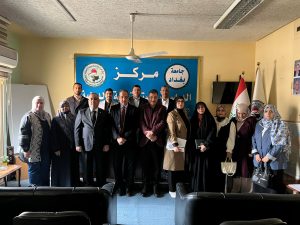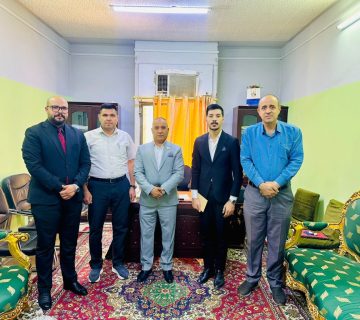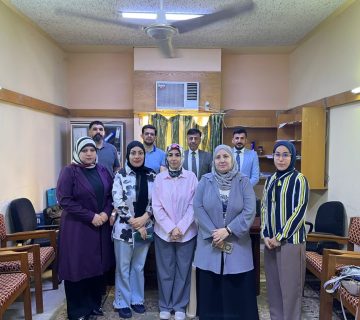
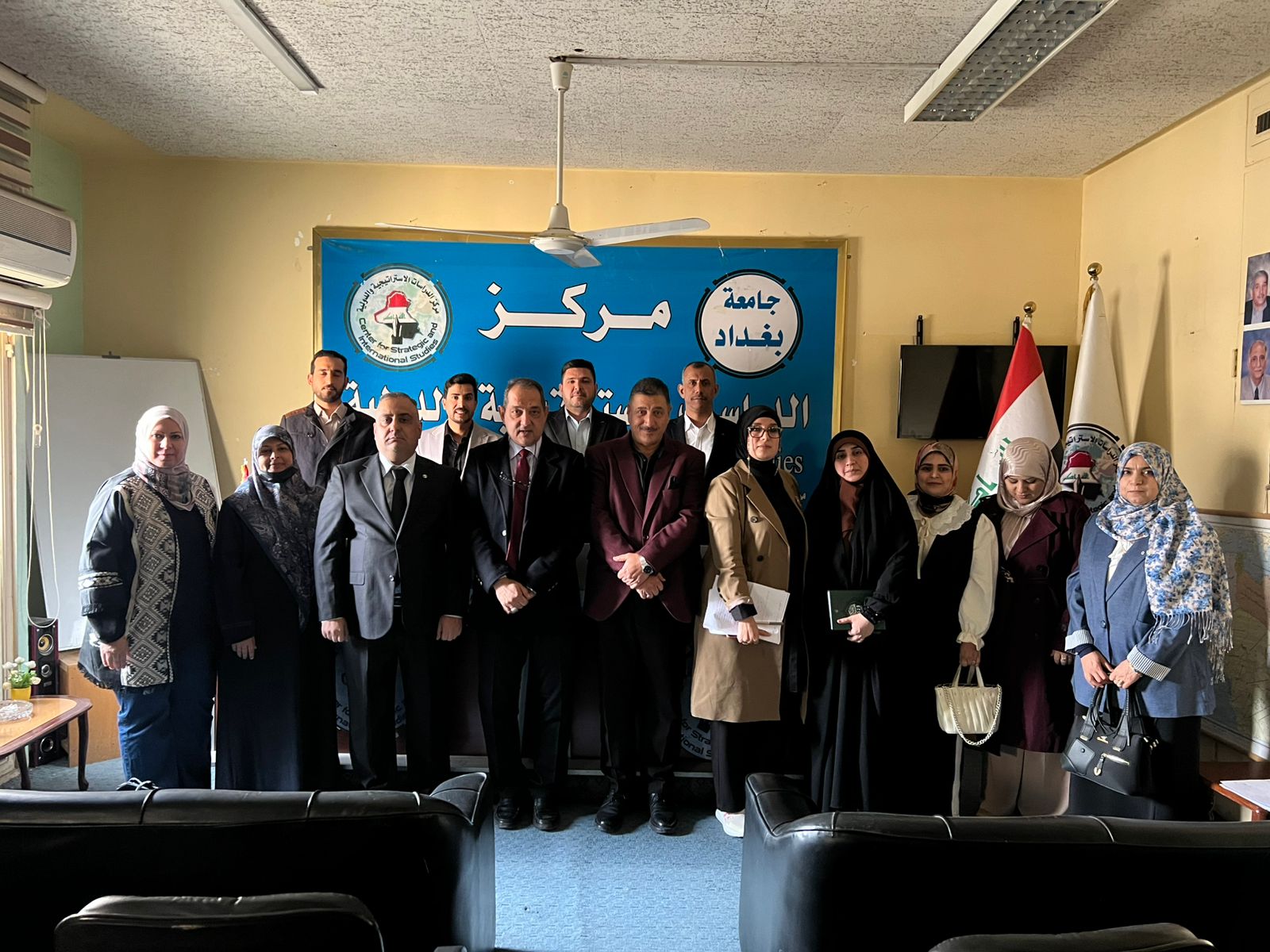
The Center for Strategic and International Studies at the University of Baghdad, in cooperation with the Continuing Education Center, organized a specialized training course entitled “Iraq in U.S. State Department Documents: A Contemporary Political–Historical Reading of the Trajectory of Bilateral Relations.” The course was held in Babylon Hall and brought together a group of researchers and specialists in political affairs and international relations.
The first day of the course featured two scholarly lectures that addressed central themes essential to understanding the historical evolution of United States policy toward Iraq. The first lecture, “Iraq in U.S. State Department Documents (1921–2003)”, was delivered by Assistant Professor Dr. Ahmed Abdul Wahid Abdul Nabi. It provided an analytical review of the most significant political and historical transformations that shaped bilateral relations during this period. The second lecture, “The Role of Oil in Shaping U.S. Strategy toward Iraq,” was presented by Lecturer Dr. Heba Naseer Abdul Razzaq and focused on the economic dimension of the relationship, emphasizing the strategic importance of energy resources in defining U.S. foreign policy priorities.
The course continued with a series of sessions examining the post-2003 phase, with particular attention to the political and economic dimensions of U.S.–Iraqi relations. The lecture entitled “The U.S. Vision of the Political System in Iraq after 2003” was delivered by Lecturer Dr. Ali Abdul Muttalib Sadiq and addressed Washington’s approaches to the structure of the Iraqi political system and the internal transformations that followed regime change. In addition, Assistant Lecturer Raad Khudhair Sulaibi presented a lecture titled “Oil and Politics: Iraq in U.S. Economic Calculations,” which analyzed the intersection of economic interests and political considerations and their impact on U.S. decision-making processes toward Iraq.