Media and Government Communication Unit
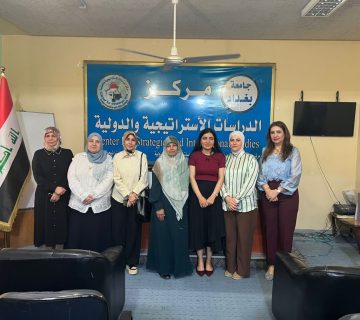
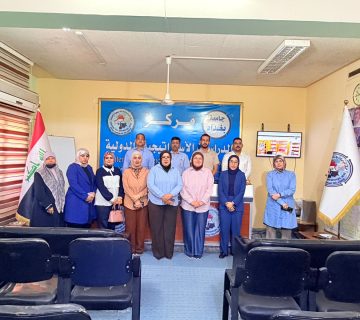
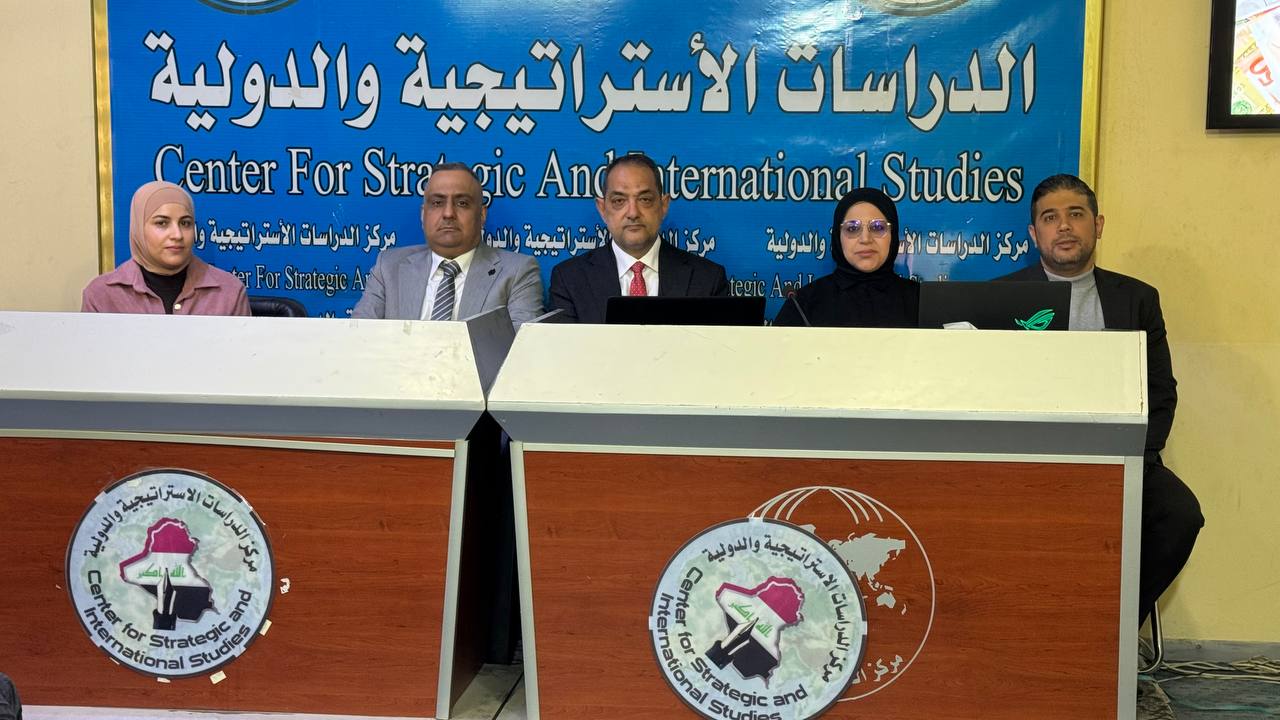
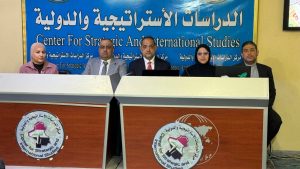
In a scholarly initiative aimed at analyzing the complex dimensions of international monetary policies and their impact on national economies, the Center for Strategic and International Studies, in cooperation with the Center for Continuing Education at the University of Baghdad, conducted a three-day specialized course entitled ‘The History of the U.S. Federal Reserve: Between Financial Function and Political Hegemony — Iraq as a Case Study.’
The course was structured around four principal themes, delivered by a group of specialized faculty members from the Center, with each session addressing a distinct dimension of the relationship under examination.
Associate Professor Dr. Ahmed Abdul Wahid Abdul Nabi presented the first theme, titled ‘The U.S. Federal Reserve: A Historical Prologue on Origins, Institutional Development, and Political and Economic Roles.’ His lecture traced the historical emergence of the Federal Reserve System and its evolution across decades, with particular emphasis on its political and economic functions within the broader international context.
The second theme, delivered by Dr. Sarah Hamid Naji and entitled “‘The Impact of the U.S. Federal Reserve on Iraqi Monetary Policy After 2003″, examined the mechanisms through which the Federal Reserve influenced the formulation of Iraqi monetary policy during the post-2003 reconstruction phase.

Assistant Lecturer Hussein Salah Mahdi presented the third theme, “The Dominance of the U.S. Federal Reserve over the Iraqi Economy After 2003,” analyzing the forms and manifestations of financial and economic dominance exercised by the Federal Reserve over Iraq’s economy in the period following 2003.
The course concluded with the fourth theme, delivered by Assistant Lecturer Insaf Talib Mohammed and titled “Iraq’s Accounts at the U.S. Federal Reserve: A Study of Political Dimensions.” This session focused on the political implications of Iraq’s accounts held at the Federal Reserve and their ramifications for Iraqi economic sovereignty.